
The meaning of the Sanksrit term āyatana (dwelling place) comes from the verb ‘to seat’ or ‘to set up’ (yātate). It rests on the pre-Buddhist veneration of the ritual site as a place of correspondence (bandhu) between the worshipper and the gods. A dwelling place (āyatana) is the place where shared satisfaction, or ease (sukha), is obtained between the worshipper and gods in the ritual work (kamma) of creation; and that ritual work (kamma) of creation is sacrifice.
In the Pali Canon, the Paṭhamachaphassāyatanasutta (SN 35.71) records Buddha teaching that a wanderer who hasn’t discovered (pajānāti) the six-fold dwelling place of contact (channaṃ phassāyatanānaṃ) is lost.
Anyone who hasn’t fully discovered (nappajānāti) the arising (samudayañca), ending (atthaṅgamañca), gratification (assādañca), wretchedness (ādīnavañca) & escape (nissaraṇañca) from the six-fold dwelling place of contact (channaṁ phassāyatanānaṁ), as it is (yathābhūtaṁ), has not fulfilled (avusitaṁ) the holy life (brahmacariyaṁ) & is far from (ārakā) this teaching & discipline (dhammavinayā).
Paṭhamachaphassāyatanasutta (SN 35.71)
Contact (phassa) describes the event (dhammā) of sense consciousness (viññāṇa) upon which feeling (vedanā) and perception (saññā) form. This term is entwined in Buddha’s teachings on the six-fold dwelling place of sense (saḷāyatana), so much so that, in fact, the Āhārasutta (SN 12.11) records Buddha teaching that the saḷāyatana is the nexus (saḷāyatananidāno), arising (saḷāyatanasamudayo), birth (saḷāyatanajātiko) and root (saḷāyatanapabhavo) of contact (phassa).
And what is the nexus (kiṁnidāno), arising (kiṁsamudayo), birth (kiṁjātiko) & root (kiṁpabhavo) of contact (phasso)?
The six-fold dwelling place of sense is the nexus (saḷāyatananidāno), arising (saḷāyatanasamudayo), birth (saḷāyatanajātiko) & root (saḷāyatanapabhavo) of contact (phasso).
Āhārasutta (SN 12.11)
In the Paṭhamadvayasutta (SN 35.92) Buddha describes the six-fold dwelling place of sense (saḷāyatana) as a dyad (dvayaṁ). This dyad (dvayaṁ), consists of an inner dwelling place (ajjhattikāni āyatana), or sense power (indriya), and an outer dwelling place (bāhirāni āyatana), or sense field (viṣaya). Buddha partitions this dyad (dvayaṁ) into six senses (saḷāyatana), which differ from Western five by including mind (mano).
It’s just the eye & form (cakkhuñceva rūpā), ear & sounds (sotañceva saddā), nose & smells (ghānañceva gandhā), tongue & tastes (jivhā ceva rasā), body & touches (kāyo ceva phoṭṭhabbā), mind & phenomena (mano ceva dhammā).
Monks, suppose someone was to say, I’ll destroy the conditions (paccakkhāya) of this dyad & describe (paññapessāmī) another. They’d have no language for that (vācāvatthukamevassa). They’d be stumped (na sampāyeyya) by questions & end up (āpajjeyya) frustrated (vighātaṁ).
What would the cause (hetu) be for that?
Because that person is without sense fields (avisayasmin)
Paṭhamadvayasutta (SN 35.92)
In practical terms, there is a perceptual gap in this dyad (dvaya). It registers as ‘this here’ (idha) and ‘that there’ (huraṃ). One way to describe this dyad is to say ‘that there’ (huraṃ), or perception (saññā), depends on ‘this here’ (idha), or sense consciousness (viññāṇa). This is a slightly difficult construct (saṅkhārā), but what we are coming to is that Buddha perceives the six-fold dwelling place of sense (saḷāyatana) as media, in a way similar to Siegfried Zielinski’s notion of media as “spaces of action for constructed attempts to connect what is separated” (Deep Time of the Media, pg.7).
In the richly informative Dutiyadvayasutta (SN 35.93), Buddha describes sense consciousness (viññāṇa) as appearing (sambhoti) in dependent relation (paṭicca) with the dyadic (dvayayaṁ) six-fold dwelling place of sense (saḷāyatana). The precise meaning of the noun viññāṇa (sense consciousness) is suggested by its verb, “to know” by discerning (vijānāti). So sense consciousness (viññāṇa) discerns phenomena (dhammā), and within that knowledge is the wisdom of how to discern phenomena (dhammā) as they are (yathābhūtaṃ).
Sense consciousness appears dependent on a duality (dvayaṁ paṭicca viññāṇaṁ sambhoti).
Eye consciousness arises (uppajjati cakkhuviññāṇaṁ) with form dependent upon the eye (cakkhuñca paṭicca rūpe).
Eye is impermanent (aniccaṁ), decaying (vipariṇāmi) & perishing (aññathābhāvi). (Thus) form is impermanent, decaying & perishing. So, this duality (itthetaṁ dvayaṁ) is tottering & toppling (calañceva byathañca); it’s impermanent, decaying & perishing.
Eye consciousness (cakkhuviññāṇaṁ) is impermanent (aniccaṁ), decaying (vipariṇāmi) & perishing (aññathābhāvi). The causes & conditions (yopi hetu yopi paccayo) that give rise (uppādāya) to eye consciousness are also impermanent, decaying & perishing.
But since eye consciousness has arisen dependent on conditions (paccayaṁ paṭicca uppannaṁ) that are impermanent (aniccaṁ), how could it exist permanently (kuto niccaṁ bhavissati)?
Dutiyadvayasutta (SN 35.93)
In the Vibhaṅgasutta (SN 12.2), Buddha states that the six-fold dwelling place of sense conditions contact (saḷāyatana paccayā phasso). Furthermore, he identifies the sense powers (indriya) as conditioning (paccayā) contact (phassa) within the six-fold dwelling place of sense (saḷāyatana). The sense powers (indriya), per se, are our six sense organs.
The six-fold dwelling place of sense conditions (saḷāyatanapaccayā) contact (phasso).
And what is the six-fold dwelling place of sense (saḷāyatanaṁ)?
The dwelling place of eye (cakkhāyatanaṁ), ear (sotāyatanaṁ) nose (ghānāyatanaṁ), tongue (jivhāyatanaṁ), body (kāyāyatanaṁ) & mind (manāyatanaṁ).
Vibhaṅgasutta (SN 12.2)
Going further, in the Dukkhasamudayasutta (SN 35.106) Buddha states that each discrete sense consciousness (viññāṇa) arises with its organs (indriya) own associational sense field (viṣaya). So, discrete sense consciousness (viññāṇa) is the dependent arising of both the sense power (indriya) and its sense field (viṣaya) at once.
Buddha names this discrete arising (uppajjati) contact (phassa). Hence, Buddha’s reference to the six-fold dwelling place of contact (channaṃ phassāyatanānaṃ) in Paṭhamachaphassāyatanasutta (SN 35.71) parallels the six-fold dwelling place of sense (saḷāyatana).
With form depending on the eye (cakkhuñca paṭicca rūpe), eye consciousness (cakkhuviññāṇaṁ) arises (uppajjati). The meeting of the three is contact (tiṇṇaṁ saṅgati phasso). […]
With phenomena depending on the mind (manañca paṭicca dhamme), mind consciousness (manoviññāṇaṁ) arises (uppajjati). The meeting of the three is contact (tiṇṇaṁ saṅgati phasso).
Dukkhasamudayasutta, (SN 35.106)
Although Buddha taught sense consciousness (viññāṇaṁ) as the sensory capacity (indriya) of six bodily organs, he taught that five have the power (pañcimāni indriyāni) to sense only their own associational sense field (viṣaya). Another term for these discrete sense powers (pañcimāni indriyāni) is the five threads of sensual desire (pañca kāmaguṇā). The sixth sense power (indriya), the mind (manas), however, undergoes (paccanubhotī) the entire six-fold dwelling place of sense (saḷāyatana).
So, just the mind (manas) discerns (vijānāti) the complete inner (ajjhattikāni) and outer (bāhirāni) six-fold dwelling place of sense (saḷāyatana) at contact (phassa). Needless to say, mind (manas) discerns (vijānāti) its own sense power (indriya) and sense field (viṣaya) at mental contact (manosamphassa) as well.
These five sense powers (pañcimāni indriyāni) each have different fields (nānāvisayāni) and ways of grazing (nānāgocarāni), and don’t undergo (paccanubhonti) any other distribution (aññamaññassa) of pasture (gocaravisayaṁ) than their own. That is, the powers of the eye (cakkhundriyaṁ), ear (sotindriyaṁ), nose (ghānindriyaṁ), tongue (jivhindriyaṁ), and body (kāyindriyaṁ).
What do these five powers, each with their different fields (nānāvisayānaṁ) and ways of grazing (nānāgocarānaṁ), which don’t undergo (paccanubhontānaṁ) any other distribution (aññamaññassa) of pasture (gocaravisayaṁ) than their own, resort to (paṭisaraṇaṁ)?
What undergoes (paccanubhotī) all these pastures (gocaravisayaṁ)?
These five powers, each with their different fields and ways of grazing, have resort to the mind (mano paṭisaraṇaṁ). The mind (mano) undergoes (paccanubhotī) all diverse pastures (nesaṁ gocaravisayaṁ).
What does the mind (mano) have resort to (paṭisaraṇan)?
It has resort to (paṭisaraṇan) recall (sati).
Uṇṇābhabrāhmaṇasutta (SN 48.42)
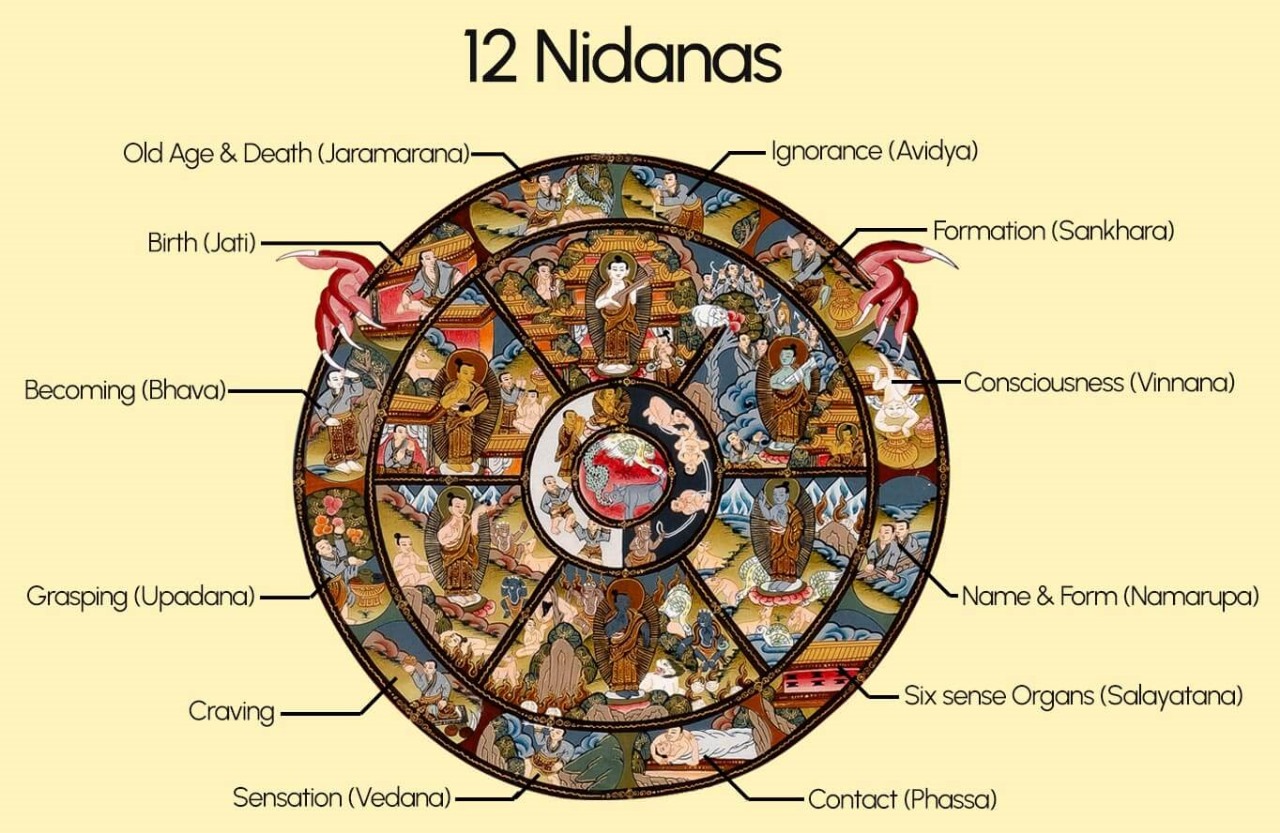
Evidently, Buddha’s penetration (vibhajja) into the nexus (nidāna) of being (bhava) produced a fulsome phenomenology. Sense consciousness (viññāṇa) is embodied. It arises (uppajjati) within the domain of sensual contact (phassa) and is concomitant upon the mind (manas) taking up (upādāna), or at least undergoing (paccanubhotī), the six-fold dwelling place of contact (channaṃ phassāyatanānaṃ), all at once.
Sense is a dyadic (dvaya) form of dependently originated inner (ajjhattikā), bodily sense powers (indriya) and outer (bāhirā) associational sense fields (viṣaya). Contact (phassa), the event of sense consciousness (viññāṇa), is limited to and conditioned by the six-fold dwelling place of sense (saḷāyatana).
I’ve decided, at least for now, that the term tathāgata (thus come/gone) for Buddha denotes his startling discovery of a phenomenological path to release (vimokṣa) – freedom (vimutti) – from this entire mass of suffering (dukkhakkhandhassa).
At any rate, the mind’s (manas) discerning (vijānāti) the five threads of sensual desire (pañca kāmaguṇā) is referred to as attention (manasikāra): make in mind. And attention (manasikāra) is action (kamma) critical to the arising of sense consciousness (viññāṇaṁ).
When attention arises (manasikārasamudayā), phenomena arise (dhammānaṁ samudayo). When attention ceases (manasikāranirodhā), phenomena end (dhammānaṁ atthaṅgamo).
Samudayasutta (SN 47.42)
So, although I hit you up with more information than you can master at this time, we can put Buddha’s discovery of the six-fold dwelling place of sense (saḷāyatana), sense consciousness (viññāṇaṁ) and the six-fold dwelling place of contact (channaṃ phassāyatanānaṃ) in a chart.
| Power (indriya) | Field (viṣaya) | Inner Dwelling Place of Sense (ajjhattikāni āyatana) | Outer Dwelling Place of Sense (bāhirāni āyatana) | Nexus of Contact (samphassa) | Body of Consciousness (viññāṇakāyā) |
|---|---|---|---|---|---|
| cakkhuṁ (eye) | rūpā (sights) | cakkhāyatanaṁ (eye) | rūpāyatanaṁ (sights) | cakkhusamphassa (eye contact) | cakkhuviññāṇaṁ (eye consciousness) |
| sotaṁ (ear) | saddā (sounds) | sotāyatanaṁ (ear) | saddāyatanaṁ (sounds) | sotasamphassa (ear contact) | sotaviññāṇaṁ (ear consciousness) |
| ghānaṁ (nose) | gandhā (smells) | ghānāyatanaṁ (nose) | gandhāyatanaṁ (smells) | ghānasamphassa (nose contact) | ghānaviññāṇaṁ (nose consciousness) |
| jivhā (tongue) | rasā (tastes) | jivhāyatanaṁ (tongue) | rasāyatanaṁ (tastes) | jivhāsamphassa (tongue contact) | jivhāviññāṇaṁ (tongue consciousness) |
| kāyo (body) | phoṭṭhabbā (touches) | kāyāyatanaṁ (body) | phoṭṭhabbāyatanaṁ (touches) | kāyasamphassa (body contact) | kāyaviññāṇaṁ (body consciousness) |
| mano (mind) | dhammā (phenomena) | manāyatanaṁ (mind) | dhammāyatanaṁ (phenomena) | manosamphassa (mind contact) | manoviññāṇaṁ (mind consciousness) |
Sources
Zielinski, Siegfried. (2006) Deep time of the media: toward an archaeology of hearing and seeing by technical means. trans., Gloria Custance. Cambridge: MIT Press.

 Epistemic Instruments